AIVetTree · Cat Oral Health Guide
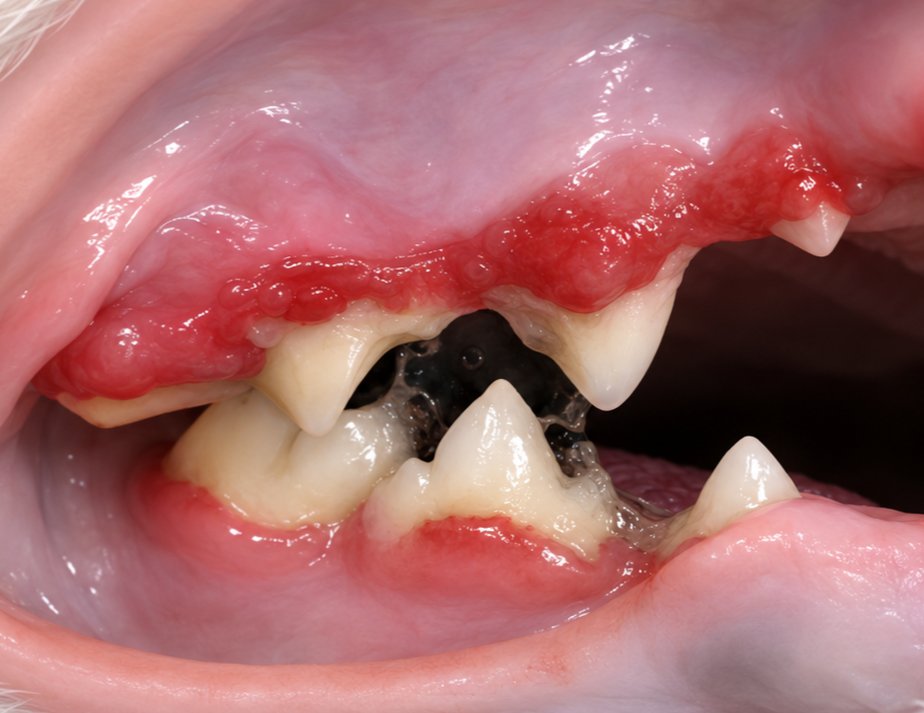
Cat's Gums Are Red and Swollen — Signs and Treatment of Gingivitis
Red, swollen gums or bleeding when touched may indicate gingivitis. Gingivitis is the earliest, reversible stage of periodontal disease. Without appropriate care, it can progress to periodontitis, where damage is difficult to reverse.
What is gingivitis?
Gingivitis is gum inflammation caused when plaque on the teeth irritates the gum line. Periodontal disease can progress from gingivitis to periodontitis. Gingivitis is reversible, while gum and bone damage from periodontitis is difficult to reverse, so early recognition matters.
In numbers
- It is reported that more than 50% of cats over 3 years of age have some form of dental or gum disease. (Cornell Feline Health Center)
- Gingivitis is its most common and earliest stage, and its progression can be slowed or reversed if treated early. (AAHA Dental Care Guidelines)
Signs to watch for
| What to look for | What it may mean |
|---|---|
| Redness or swelling of the gum line | Representative signs of inflammation |
| Bleeding when brushing or touching teeth | Characteristics of inflamed gums |
| Bad breath | Accompanied by bacteria and inflammation (Bad Breath Guide) |
| Tartar is visible at the gum border | Hardened plaque (tartar guide) |
Care you can do at home
- Daily toothbrushing is the main home-care step. Plaque begins to build up again within hours after eating. (AAHA)
- No human toothpaste — use a product made specifically for pets.
- It is helpful to choose dental products that have the VOHC certification mark.
- Arrange a veterinary exam if tartar has hardened or the gums are bleeding or painful. Hardened tartar cannot be removed at home.
When to see a veterinarian
- When gums are very swollen or bleeding or pain is evident
- When not eating well or drooling
- When there is no improvement within 2-4 weeks despite home care
- When tartar has accumulated thickly at the gum line (requires professional scaling)
Frequently asked questions
My cat's gums are red. Is this okay?
A red or swollen gum line may be a sign of gingivitis. Early inflammation may improve with daily plaque control and appropriate care. Arrange a veterinary exam if there is bleeding or pain, or if the gums do not improve after 2–4 weeks.
Does gingivitis get better on its own?
Early gingivitis can be reversed with plaque control (daily brushing) and scaling when necessary. However, if left untreated and progresses to periodontitis, gum and bone damage becomes difficult to reverse.
What is the difference between gingivitis and periodontitis?
Gingivitis is an early and reversible stage limited to the gums, while periodontitis is an advanced and irreversible stage in which the bone and ligaments under the gums are damaged. The earlier you manage it, the better.